This roundup summarises the most important news stories around the world in the last month (May 2024).
Subscribe to the monthly socialservice.sg newsletter and check out the socialservice.sg podcast!
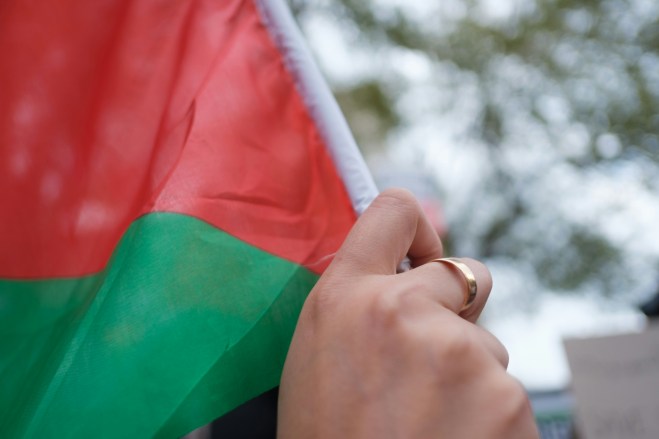
The International Criminal Court (ICC) announced that it was seeking arrest warrants for Hamas leader Yahya Sinwar and Israeli prime minister Benjamin Netanyahu on charges of war crimes and crimes against humanity. Warrants are also sought for other top Hamas and Israeli leaders. Relatedly, the International Court of Justice ordered Israel to stop all military action and operations which may lead to the loss of civilian life in the Gazan city of Rafah. All these happened as the governments of Ireland, Norway, and Spain recognised Palestinian statehood, and as the United Nations (UN) overwhelmingly passed a resolution calling for the Security Council to reconsider Palestinian membership to the General Assembly.
Within Israel, the local operations of Al Jazeera was shut down, in a move widely denounced as anti-democratic. Members Benny Gantz and Yoav Gallant – who, together with Mr. Netanyahu compose Israel’s three-person war cabinet – threatened to quit if the prime minister did not articulate a plan for post-war Gaza. However, the aforementioned ICC announcement forestalled any further progress.
Finally, in Iran, president Ebrahim Raisi, alongside the country’s foreign minister, died in a helicopter crash, leaving the country without two of its most influential leaders.
Other geopolitical developments
In Armenia, protests followed after the prime minister agreed to hand over four border villages to Azerbaijan. In the French overseas territory of New Caledonia, riots erupted over a Paris-proposed bill which would change who is eligible to vote in local elections. In Haiti, to help quell gang violence, Kenya will deploy police officers to lead an UN-authorised multinational mission.
And in Hong Kong, in the shadow of a 2020 national security law drafted by China, in the region’s largest national security trial, a court found 14 pro-democracy activists guilty of conspiring to subvert the government
Political triumphs and upsets
The Georgian parliament overruled a presidential veto of a “foreign agents” bill which would require media and non-profit organisations to register if they receive more than 20 per cent of funding from outside the country. The African National Congress, which ended apartheid in South Africa three decades ago, lost its absolute majority in parliament. In the same month, former president Jacob Zuma was also barred by the country’s top court from running for parliament, given this 15-month jail sentence for contempt of court in 2021.
Separately, the Slovakian prime minister was shot five times and seriously injured, in what appeared to be a politically motivated assassination attempt. And in the United States, former president Donald Trump became the country’s first president to be declared a felon, following his conviction on all 34 counts of falsifying business records to cover up a sex scandal.
In the Dominican Republic, the president won his re-election bid in a landslide. In Nepal, the prime minister won a vote of confidence, amid charges from the opposition that his deputy prime minister, in charge of the home ministry, illegally took large sums of money before entering politics. In Panama, days after the frontrunner, a former president, was convicted of money laundering and disqualified, the country’s former security minister, a replacement for the frontrunner, won the presidency.
Natural and man-made disasters
In Brazil, severe flooding killed over a hundred people. In DR Congo, at a mortality rate of roughly five per cent (compared to less than 0.2 per cent two years ago), a deadlier version of mpox or monkeypox is affecting the country. In Papua New Guinea, a deadly landslide killed hundreds of people.
And in the United Kingdom, a report revealed that the country’s health system wrongfully exposed over 30,000 patients to compromised blood samples and engaged in a cover-up. In this biggest treatment disaster of the National Health Service, doctors and authorities did not disclose the risks or inform the patients when they were infected with HIV or Hepatitis C.
 socialservice.sg