This roundup summarises the most important news stories around the world in the last month (March 2025).
Subscribe to the monthly socialservice.sg newsletter and check out the socialservice.sg podcast!
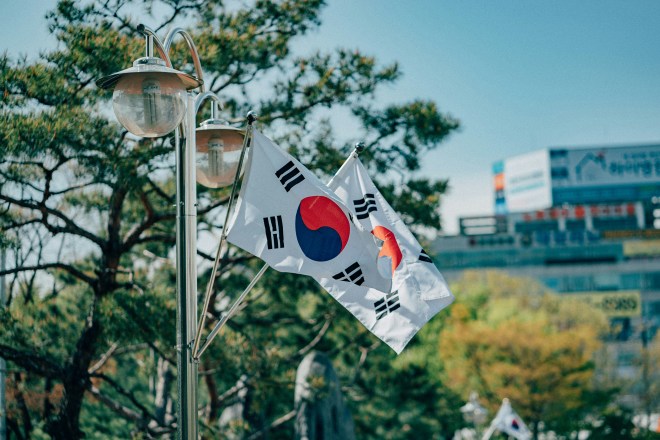
In South Korea, politically, impeached president Yoon Suk Yeol was released after a ruling that he was detained illegally, but he still faces insurrection and other charges. Then, the impeachment of a former prime minister was overturned by a court, thereby reinstating him as acting president.
The Truth and Reconciliation Commission found that adoption agencies committed widespread malpractices decades ago, when children were sent to American and European homes. The report was the government’s first official admission of problems related to rights violations of South Korean adoptees. Separately, at least 15 people were wounded after two of its fighter jets accidentally dropped bombs on a civilian area during a live-fire exercise. And multiple wildfires, the worst in the country’s history, killed at least 24 people.
In Syria, the new government has been struggling to restore control, following clashes between state military forces and gunmen loyal to the ousted president Bashar al-Assad. The majority of victims also appear to be civilians targeted in revenge killings. With thousands dead and curfews imposed, it is the worst violence since Mr. Assad’s ousting in December 2024. Later, the Kurdish-led militia which controls part of the country agreed to merge with the new government, a breakthrough which signifies a major step towards unification.
And in Turkey, authorities detained the president’s main political rival on charges of corruption and aiding a terrorist group, capping a months-long legal crackdown on opposition figures. It has resulted in the country’s largest protests in over a decade.
Elections in the horizon and the present
In Canada, former central banker Mark Carney – with no real political background – won a race to become leader of the country’s ruling Liberal Party, thus succeeding Justin Trudeau as prime minister. Mr. Trudeau had resigned two years ago after losing support from his coalition government. Mr. Carney then called for a new election to take place in end-April, as he continues to grapple with uncertainty over tariffs and growing tension with the new United States (US) administration.
In Europe, in Greece, the centre-right government survived a vote of no confidence over a deadly 2023 train crash – the country’s worst rail disaster – which prompted peaceful demonstrations and demands for accountability. In Greenland, a centre-right party which favours gradual independence from Denmark and opposes the US’s wishes to acquire the territory won a surprise general election victory. The territory has been controlled by Denmark for almost 300 years. And in Romania, thousands took to the streets to express support for the European Union, ahead of a repeat of the country’s two-round presidential election.
Diplomatic and geopolitical conflicts
Belgium and Rwanda expelled each other’s diplomats, over their alleged roles in the conflict in eastern DR Congo. In Gaza, Israel launched large-scale strikes, in the region’s first major attacks since the fragile January ceasefire. And in Yemen, the US struck Houthi-rebel held positions over continued attacks on commercial vessels using Red Sea shipping lanes.
Finally, approximately five years ago in 2020, the World Health Organisation declared the COVID-19 outbreak a pandemic.
Political consequences and repercussions
In the Philippines, former president Rodrigo Duterte was arrested under a warrant issued by the International Criminal Court, for alleged crimes against humanity linked to his war on drugs. In Serbia, over 100,000 student-led protestors participated in a series of anti-corruption demonstrations, especially prompted by the collapse of a railway station roof which ignited anger over corruption and lax construction oversight. And in Sudan, government forces recaptured the presidential palace in the country’s capital, marking a symbolic victory against a powerful paramilitary group.
And in other news, in the United Kingdom, Heathrow Airport in London was shut down, following a power outage due to a nearby fire at an electrical substation, affecting over 1,300 flights and hundreds of thousands of travellers globally.
 socialservice.sg