Classroom in Brazil

“Interprofessional collaboration between social workers and school counsellors in tackling youth at-risk behaviour”: Of social service mandates and definitions of “at-risk”

The collaboration (and conflicts) between social workers and school counsellors – in the school context, working with and for “at-risk” students – is (are) the focus of Lim and Wong’s (2018) study, which has the potential to offer practical recommendations for such professionals across Singapore. While some of the dynamics are well-documented, three limitations should be highlighted: First, the focus on inter-professional collaboration at the individual level ignores more structural mandates dictating the roles of the counsellors and social workers (and is thus a missed opportunity to interrogate how the professionals perceive their responsibilities); second, there was only one counsellor-social worker dyad in the sample of nine, which means professional interactions were not adequately captured; and third, persistent reliance on the label “at-risk”, in my opinion, continues to be problematic.


Abandoned tunnel

Changing perceptions of death and care for the sick: Contextualising hypotheses and longitudinal comparisons

A study by the Singapore Management University (SMU) has found that more Singaporeans – including younger Singaporeans between 21 and 50 years old – are more comfortable with discussing death and are now “more aware and better informed of the purpose of palliative care in ‘relieving symptoms and improving the quality of life’ of older patients”. It was led by SMU’s Dr. Yeo Su Lin, who also argued that digital media and online interactions are likely explanations (or hypotheses) for younger Singaporeans to engage in conversations focused on the end-of-life or on death.

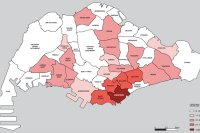
Map illustrating the distribution of street homeless people in Singapore

“Homeless in Singapore: Results from a nationwide street count”: Putting the “1,050 street homeless people” in context

Ng’s (2019) excellent and policy-relevant research was characterised by robust data collection – using two different types of counts and involving social service agencies in the research – the creation of a base (figure) for future research and for regular counts longitudinally, as well as the pairing of the causes of homelessness with policy recommendations. Two limitations, nonetheless, should be flagged. The absence of: First, contextualisation of the 921 to 1,050 street homeless people in Singapore, especially in comparison to other developed countries or cities where, as mentioned in the publication, counts of homeless populations are part of regular policy activity; and second, substantive and empirical attention linked to the family and community networks of these individuals.

Dakota train station

“‘Bridges and ladders’: The paradox of equity in excellence in Singapore schools”: The problem of inequality beyond the schools

That the Singaporean discourse on inequality has centred disproportionately on schools and the education system is unsurprising, especially since meritocracy remains perceived as the country’s main principle of governance. Yet, notwithstanding the elitism and lack of demographic representation associated with top schools, if sources of inequality stem from economic or labour policies, the hypothesis that the education system could in fact be mitigating the effects of socio-economic disparities should be taken more seriously.