Graduation at Marina Barrage

““Getting ahead in Singapore”: How neighbourhoods, gender, and ethnicity affect enrolment into elite schools”: Using JC yearbooks as data

Given the challenges associated with obtaining complete data of the socio-economic diversity of Singapore’s top schools, Chua et al.’s (2019) research strategy of using 40 years of junior college (JC) yearbooks (1971 to 2010) as data – to study the influence of neighbourhoods, gender, and ethnicity on elite school enrolment – is therefore a very interesting workaround.

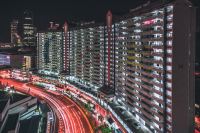
Chinatown city building

The impact of housing on children’s future “economic status”: Go beyond headlines to interrogate research design

Three newspapers – ST, TODAY, and BT – reported on the same research study by the National University of Singapore on intergenerational “housing wealth”, yet they all failed to interrogate the design and findings of the study (in this vein, to ask the researchers tougher questions about their research) or to question the proposed causal mechanisms linking a Singaporean’s housing or neighbourhood in childhood to his or her future “economic status” (represented by housing wealth).

Coloured pencils

Incomplete data: The socio-economic diversity of Singapore’s top schools

Even though a ST report (Sept. 16) shed some light on the lack of socio-economic diversity among medical and dental undergraduates at the local universities – finding that two-thirds of them come from households earning more than $9,000 a month – a complete picture of socio-economic diversity among medicine and dentistry students remains elusive. We do not know how the income representation of students has changed over time. And in addition to household income, we do not know the socio-economic distribution of these students based on per-capita income, housing type, parental education and employment, as well as their past schools.