A HDB block with clothes left out to dry

“Mind the chasm”: The pandemic’s devastatingly uneven impact and the insecurities of low-income families across multiple, intersecting dimensions

This month, in the same week that the Department of Statistics revealed that households in the bottom 10 per cent were the group hit hardest by the COVID-19 pandemic, with their monthly total earnings from work falling by 6.1 per cent, Beyond Social Services published its “Mind the Chasm” report.

Farrer Park, Singapore

“Ah Umm” and our collective, persistent inability to talk about poverty, inequality, and social welfare in Singapore

Stories about low-income or low-wage Singaporeans who struggle to make ends meet or receive inadequate financial assistance follow familiar patterns. First, they are documented and shared without consent. The ensuing social media conversations are a mix of outrage, scepticism, and resignation. There are concurrent attempts to identify, to verify, and to follow up with the individual. The speedier the story goes viral, the government (frequently fronted by MSF) hurries to investigate and to clarify, concluding with the assurance that assistance has been or will be extended.

Fresh bear garlic on wooden table with knife

Food insecurity in Singapore: Tackling the root causes of hunger, not just intervention mechanisms

Through a two-part series – the first documenting the 4.1 per cent of Singaporeans facing moderate to severe food insecurity (CNA, Feb. 16) and the second evaluating the over 100 food assistance groups helping those in need (CNA, Feb. 23) – Channel NewsAsia (CNA) cast additional light on a phenomenon which demands greater attention on its root causes, not just the shortcomings of existing intervention mechanisms. In other words, how do we prevent Singaporeans from going hungry in the first place, and if they do experience food insecurity what are the more effective, not just more efficient, ways of dealing with the problem?

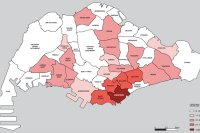
Map illustrating the distribution of street homeless people in Singapore

“Homeless in Singapore: Results from a nationwide street count”: Putting the “1,050 street homeless people” in context

Ng’s (2019) excellent and policy-relevant research was characterised by robust data collection – using two different types of counts and involving social service agencies in the research – the creation of a base (figure) for future research and for regular counts longitudinally, as well as the pairing of the causes of homelessness with policy recommendations. Two limitations, nonetheless, should be flagged. The absence of: First, contextualisation of the 921 to 1,050 street homeless people in Singapore, especially in comparison to other developed countries or cities where, as mentioned in the publication, counts of homeless populations are part of regular policy activity; and second, substantive and empirical attention linked to the family and community networks of these individuals.

American dollar bill

“Reducing debt improves psychological functioning and changes decision-making in the poor”: The value of quasi-experimentation

Published in the Proceedings of the National Academy of Sciences – the second most cited scientific journal in the world – the study by Ong et al. (2019) examines the relationship between debt relief among low-income individuals and their psychological functioning and economic decision-making. In this vein, it is worthwhile to evaluate the value of quasi-experimentation, to consider how they define and operationalise key concepts, and to share the significance and implications of the findings on social services and policies in Singapore.