Chinatown city building

The impact of housing on children’s future “economic status”: Go beyond headlines to interrogate research design

Three newspapers – ST, TODAY, and BT – reported on the same research study by the National University of Singapore on intergenerational “housing wealth”, yet they all failed to interrogate the design and findings of the study (in this vein, to ask the researchers tougher questions about their research) or to question the proposed causal mechanisms linking a Singaporean’s housing or neighbourhood in childhood to his or her future “economic status” (represented by housing wealth).
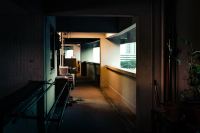
Hallway of a HDB flat in Singapore

“This is What Inequality Looks Like”: Almost two years later, what does action look like?

“This is What Inequality Looks Like” (2018) by Teo You Yenn galvanised a national conversation on inequality and poverty, yet almost two years later – of no fault of the author – the extent to which the rhetoric has translated into sustainable action is less clear. While the government has introduced policy changes, community groups have started initiatives, and academics have taken greater research interest in these issues, the underlying assumption that Singapore should “lift the bottom, not cap the top” has gone unquestioned.

Coloured pencils

Incomplete data: The socio-economic diversity of Singapore’s top schools

Even though a ST report (Sept. 16) shed some light on the lack of socio-economic diversity among medical and dental undergraduates at the local universities – finding that two-thirds of them come from households earning more than $9,000 a month – a complete picture of socio-economic diversity among medicine and dentistry students remains elusive. We do not know how the income representation of students has changed over time. And in addition to household income, we do not know the socio-economic distribution of these students based on per-capita income, housing type, parental education and employment, as well as their past schools.

Person reading a newspaper

“Singapore, Disrupted”: All the questions, but not the answers

Although “Singapore, Disrupted” (2018) by political columnist and ST Opinion editor Chua Mui Hoong – a collection of her essays and published articles – offers an interesting primer of the ostensibly most pressing socio-political issues in Singapore, its effectiveness as a call to action on these issues is less clear. By drawing primarily upon past pieces, even with the fresh inclusion of four introductions to each of the four parts of the book, a vision of or roadmap to the future appears absent. Moreover, the book’s most substantive part on the class divide is not necessarily followed by equally insightful parts on disruption, on politics in Singapore, as well as on founding prime minister Lee Kuan Yew, prime minister Lee Hsien Loong, and their family.